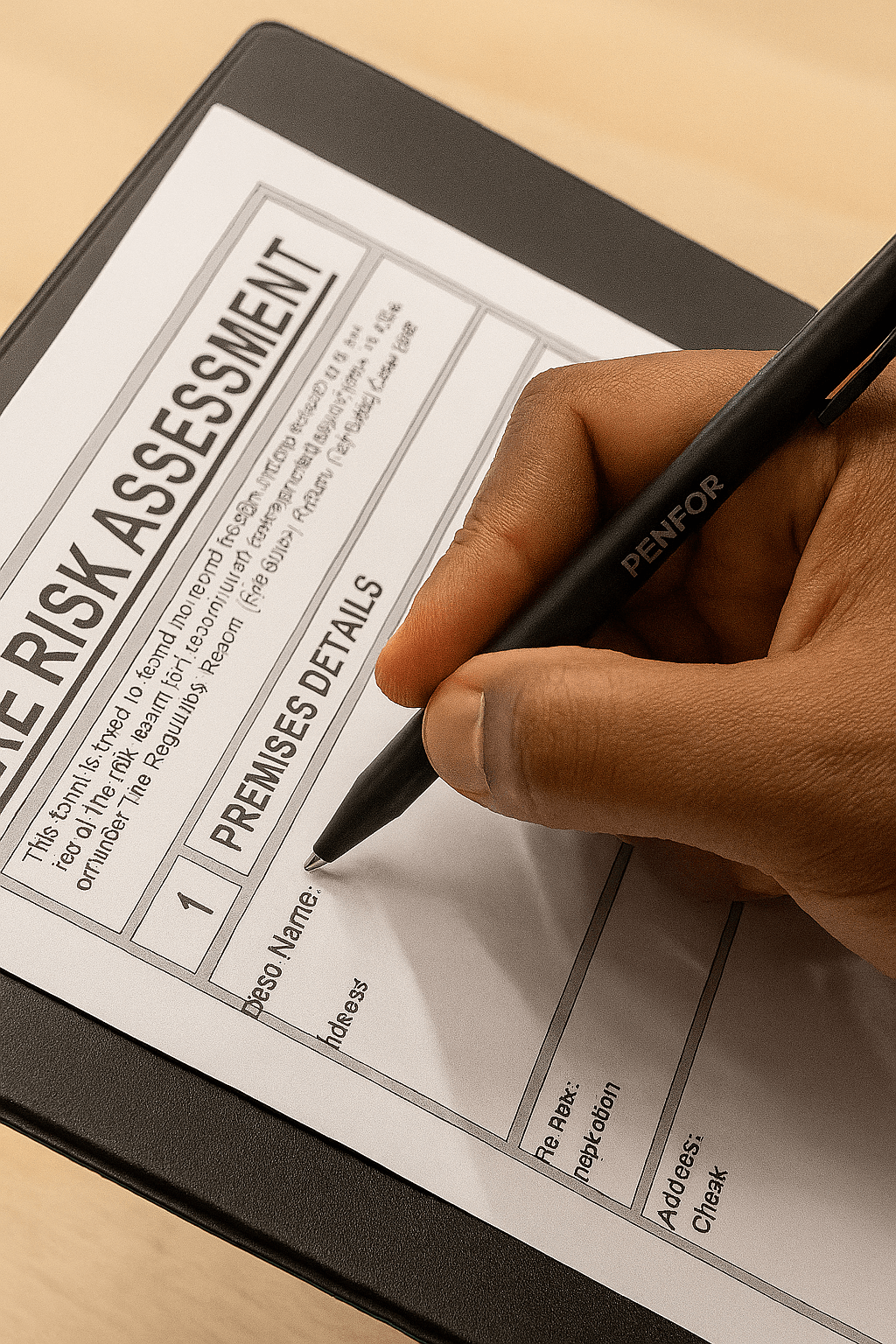
Emergency lighting must be tested regularly to ensure it works during a power failure or emergency evacuation. UK guidance states that emergency lighting should undergo a short functional test every month and a full duration test once a year. These checks confirm that lights activate correctly, stay illuminated for the required period, and support safe evacuation routes.
For business owners and building managers, regular testing is not just good practice. It is a legal responsibility under UK fire safety legislation.
Why Emergency Lighting Testing Matters
Emergency lighting guides people to safety if normal lighting fails during a fire or power outage. It illuminates escape routes, stairwells, corridors, and exit signs so occupants can evacuate safely.
Without regular inspection, faults may go unnoticed. Batteries degrade over time, fittings can fail, and wiring may become damaged. If lights fail during an emergency, evacuation becomes more dangerous.
The UK government states that businesses must maintain fire safety equipment in good working order.
Regular testing confirms that your emergency lighting system will operate when it matters most.
How Often Should Emergency Lighting Be Tested?
Emergency lighting should follow two key testing intervals.
Monthly Emergency Light Test
A short functional emergency light test should take place every month. This test simulates a mains power failure and checks that each emergency light activates.
During this test, the lighting only needs to remain on briefly. The goal is to confirm that lamps illuminate and batteries respond correctly.
Building managers should record the results in a fire safety logbook.
Annual Emergency Lighting Test
Emergency lighting testing requirements UK standards also require a full annual test. This inspection checks whether the lighting can operate for the full rated duration, usually three hours.
During this test, engineers disconnect the main power supply and allow the emergency lights to run on battery power. If lights fail before the full duration, the system requires repair or battery replacement.
Annual testing ensures the entire system meets safety requirements.
Emergency Lighting Testing Requirements UK Businesses Must Follow
Emergency lighting testing requirements UK guidance comes from the Regulatory Reform Fire Safety Order 2005 and British Standard BS 5266.
These regulations place responsibility on the building’s responsible person. This is usually the employer, landlord, or facilities manager.
Their duties include:
- Ensuring emergency lighting is installed correctly
- Carrying out regular emergency light test procedures
- Keeping maintenance records
- Fixing faults without delay
Many organisations work with a fire & security company in Essex to manage these inspections and maintain compliance.
What Happens During an Emergency Light Test?
Testing includes several steps that verify system performance.
Visual Inspection
Engineers inspect light fittings, signage, and wiring. They check for damage, obstruction, or poor positioning.
Function Test
The short monthly test confirms that lights activate during simulated power loss.
Full Duration Test
The annual test verifies that lights remain operational for the required emergency period.
Detailed reports record the results and identify any necessary repairs.
Common Problems Found During Testing
Routine inspections often reveal issues such as:
- Battery failure due to age
- Damaged light fittings
- Incorrect installation positions
- Lights blocked by shelving or equipment
- Faulty wiring
Regular maintenance prevents small faults from becoming serious safety risks.
How Professional Maintenance Supports Compliance
Managing emergency lighting testing across a large building can be difficult. Professional engineers understand the technical requirements and testing procedures.
Assured Fire & Security supports businesses across Essex with emergency lighting installation and maintenance. Our engineers inspect systems, perform required tests, and ensure compliance with UK safety regulations.
Many clients combine emergency lighting maintenance with fire alarm servicing to ensure their entire fire protection system works together.
FAQs
Is emergency lighting testing a legal requirement?
Yes. UK fire safety law requires emergency lighting systems to be maintained and tested regularly.
Who is responsible for emergency lighting testing?
The responsible person for the building must ensure testing takes place and records are maintained.
What happens if emergency lighting fails a test?
Faults must be repaired or components replaced as soon as possible to maintain safe evacuation routes.
Need an inspection?
If your emergency lighting system is due for inspection, Assured Fire & Security can help. Our engineers carry out professional testing, maintenance, and system upgrades to keep your premises compliant with UK regulations. Contact us today to arrange an inspection and ensure your building remains safe and prepared for emergencies.